J. L. BELL is a Massachusetts writer who specializes in (among other things) the start of the American Revolution in and around Boston. He is particularly interested in the experiences of children in 1765-75. He has published scholarly papers and popular articles for both children and adults. He was consultant for an episode of History Detectives, and contributed to a display at Minute Man National Historic Park.

Subscribe thru Follow.it


•••••••••••••••••


Showing posts with label Dr. Nathaniel Perkins. Show all posts

Tuesday, September 09, 2025

“Swelled to three times his size, black as bacon”
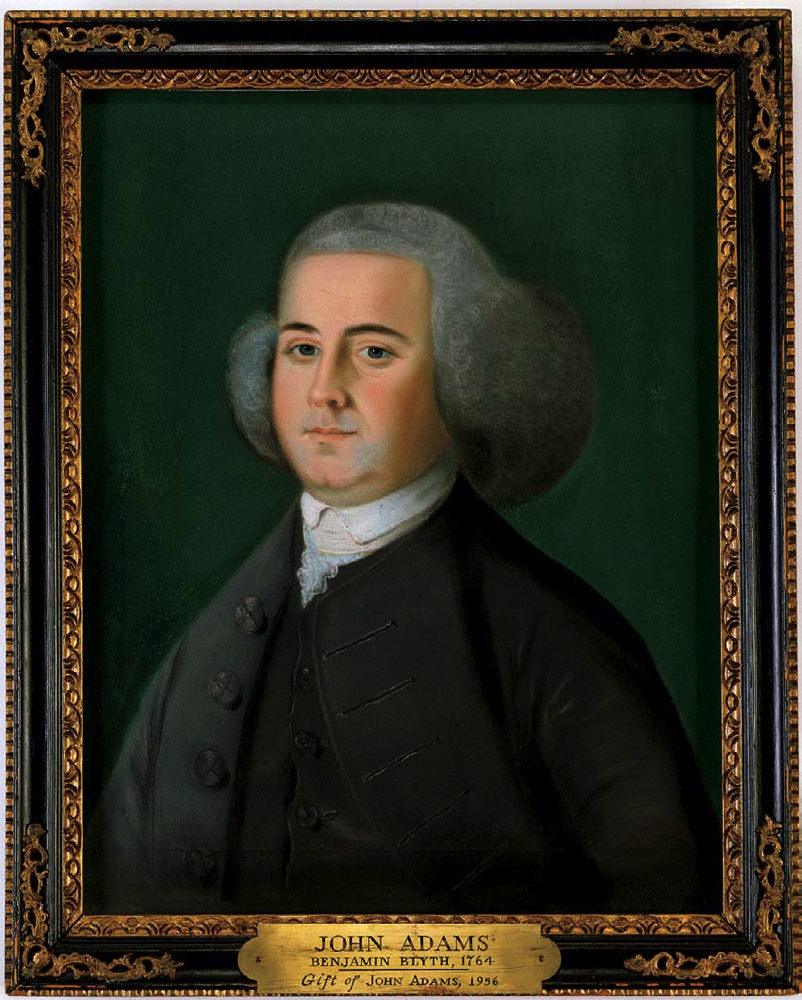
Here’s another account of anti-epidemic measures from the Adams family papers, this one a 17 Apr 1764 letter from John Adams to his fiancée, Abigail Smith.

John had gone into Boston to be inoculated with smallpox under the care of Dr. Nathaniel Perkins, and he reported:
Messrs. Quincy’s Samuel and Josiah, have the Distemper very lightly. I asked Dr. Perkins how they had it. The Dr. answerd in the style of the Faculty “Oh Lord sir; infinitely light!” It is extreamly pleasing, says he, wherever we go We see every Body passing thro this tremendous Distemper, in the lightest, easiest manner, conceivable.

The Dr. meaned, those who have the Distemper by Inoculation in the new Method, for those who have it in the natural Way, are Objects of as much Horror, as ever.

There is a poor Man, in this Neighbourhood, one Bass, now labouring with it, in the natural Way. He is in a good Way of Recovery, but is the most shocking sight, that can be seen. They say he is no more like a Man than he is like an Hog or an Horse—swelled to three times his size, black as bacon, blind as a stone. I had when I was first inoculated a great Curiosity to go and see him; but the Dr. said I had better not go out, and my Friends thought it would give me a disagreable Turn.

My Unkle [Dr. Zabdiel Boylston?] brought up one [John] Vinal who has just recoverd of it in the natural Way to see Us, and show Us. His face is torn all to Pieces, and is as rugged as Braintree Commons.

This Contrast is forever before the Eyes of the whole Town, Yet it is said there are 500 Persons, who continue to stand it out, in spight of Experience, the Expostulations of the Clergy, both in private and from the Desk, the unwearied Persuasions of the select Men, and the perpetual Clamour and astonishment of the People, and to expose themselves to this Distemper in the natural Way!—

Is Man a rational Creature think You?—Conscience, forsooth and scruples are the Cause.—I should think my self, a deliberate self Murderer, I mean that I incurred all the Guilt of deliberate self Murther, if I should only stay in this Town and run the Chance of having it in the natural Way.
Smallpox continued to spread well into the age of photography, so there’s graphic documentation of how victims look when the blisters break out. I don’t recommend it.

Monday, June 29, 2020

Perspectives on Boston’s 1764 Smallpox Epidemic

On 13 Apr 1764, John Adams sent his fiancée Abigail a story about being inoculated against smallpox in Boston.

Through a cousin of Abigail’s, Dr. Cotton Tufts, Adams and his brother had received a referral to Dr. Nathaniel Perkins. At first Perkins responded that he wasn’t taking any new patients, however, and that the brothers should have prepared with medications before coming into town. When Adams wrote again, dropping Tufts’s name, that changed things:
The Dr. came, immediately with Dr. [Joseph] Warren, in a Chaise—And after an Apology,…for not recollecting what Dr. Tufts had told him, Dr. Perkins demanded my left Arm and Dr. Warren my Brothers.

They took their Launcetts and with their Points divided the skin for about a Quarter of an Inch and just suffering the Blood to appear, buried a Thread about a Quarter of an Inch long in the Channell. A little Lint was then laid over the scratch and a Piece of a Ragg pressed on, and then a Bandage bound over all—my Coat and waistcoat put on, and I was bid to go where and do what I pleased. (Dont you think the Dr. has a good Deal of Confidence in my Discretion, thus to leave me to it?)

The Doctors have left us Pills red and black to take Night and Morning. But they looked very sagaciously and importantly at us, and ordered my Brother, larger Doses than me, on Account of the Difference in our Constitutions.
This was the first time Adams met Warren, whom he described as “a pretty, tall, Genteel, fair faced young Gentleman.” Warren was still only twenty-two years old. Eventually he would become an Adams family physician, political colleague, and friend. As a doctor barely out of training, Warren didn’t lead Boston’s fight against smallpox in 1764, but that was the first public health crisis he faced and thus a milestone in his medical career.

The Dr. Joseph Warren Historical Society was founded recently by Randy Flood, an interpreter at the American Revolution Museum at Yorktown. Randy’s using the current pandemic to explore the 1764 smallpox outbreak through a series of online interviews, which you can watch here. So far he and Christian Di Spigna, author the Warren biography Founding Martyr, have talked to:

Friday, December 06, 2019

James Otis’s Medical Recovery

According to James Otis’s first biographer, William Tudor, Jr., after his brawl in the British Coffee-House in September 1769 he received care from “Doctors Perkins and Lloyd.”

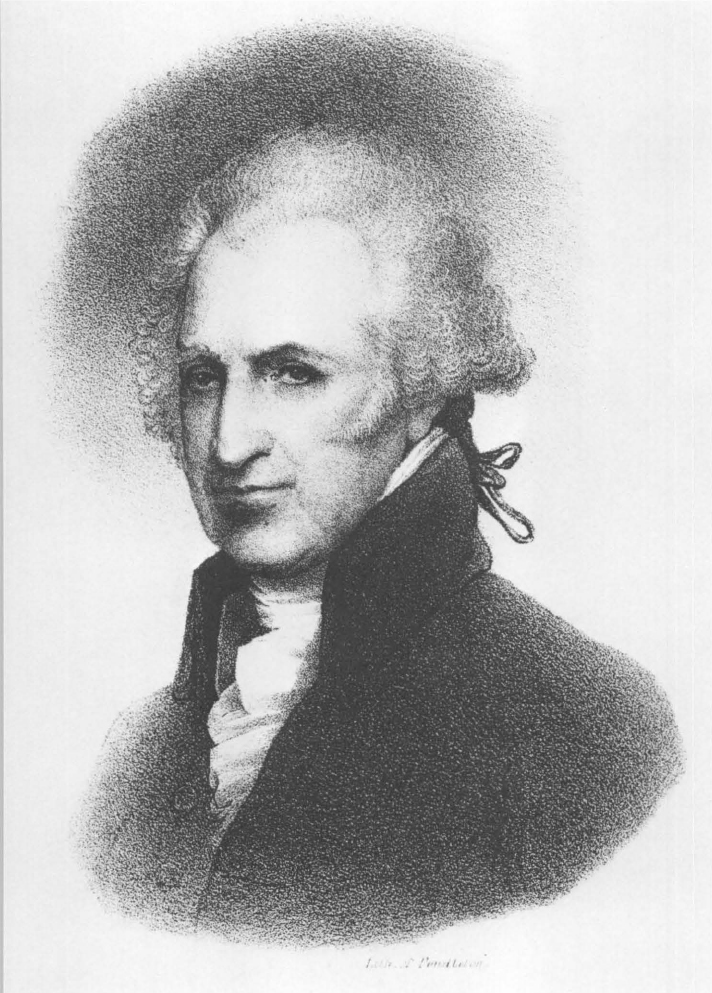
Dr. James Lloyd (1728-1810, shown here) was one of Boston’s leading medical practitioners. Although he was a Loyalist in his politics, he remained in town after the siege and reestablished his popularity and practice.

There were three prominent doctors named Perkins in Boston at this time: John Perkins (1698-1781), his son William Lee Perkins (1737-1797), and Nathaniel Perkins (1715-1799). Nathaniel seems to have had the most active practice, so he’s most likely to have examined Otis. The court records (more about that tomorrow) could say for certain.

Back in 1764 Dr. Nathaniel Perkins inoculated John Adams against smallpox, and Adams described him this way:
Dr. Perkins is a short, thick sett, dark Complexioned, Yet pale Faced, Man, (Pale faced I say, which I was glad to see, because I have a great Regard for a Pale Face, in any Gentleman of Physick, Divinity or Law. It indicates search and study). Gives himself the alert, chearful Air and Behaviour of a Physician, not forgeting the solemn, important and wise.
Lloyd and Perkins found James Otis had suffered a deep head wound. They reportedly testified that it must have come from “a sharp instrument,” which Whigs insisted meant a sword. Nonetheless, all the eyewitness evidence says Customs Commissioner John Robinson walloped Otis with a walking stick.

Years later Adams wrote that Otis bore “a scar, in which a man might bury his finger,” and joked, “what is worse, my friends think I have a monstrous crack in my skull.”

At first, people thought Otis would recover. Within a few weeks he was behaving more rationally than before the fight. Toward the start of this series of postings I quoted a couple of entries from John Adams’s diary just before the brawl. In early September Adams had been struck, then annoyed, by how much Otis was talking at social events.

The next time Adams mentioned Otis in his diary (which he kept sporadically enough that year that this might not have been the next time they met) was on 19 October. Adams wrote:
Last night I spent the Evening, at the House of John Williams Esqr. the Revenue officer, in Company with Mr. Otis, Jona. Williams Esqr. and Mr. McDaniel a Scotch Gentleman, who has some Connection with the Commissioners, as Clerk, or something.

Williams is as sly, secret and cunning a fellow, as need be. The Turn of his Eye, and Cast of his Countenance, is like [Ebenezer] Thayer of Braintree. In the Course of the Evening He said, that He knew that Lord Townsend borrowed Money of [Charles] Paxton, when in America, to the amount of £500 st. at least that is not paid yet. He also said, in the Course of the Evening, that if he had drank a Glass of Wine, that came out of a seizure, he would take a Puke to throw it up. He had such a Contempt for the 3ds. of Seisures. He affects to speak slightly of the Commissioners and of their Conduct, tho guardedly, and to insinuate that his Connections, and Interest and Influence at Home with the Boards &c. are greater than theirs.

McDaniel is a composed, grave, steady Man to appearance, but his Eye has it’s fire, still, if you view it attentively.—

Otis bore his Part very well, conversible eno, but not extravagant, not rough, nor soure.
Adams was acerbic about Inspector Williams’s boasting but thought Otis very well behaved. He no longer monopolized conversation or indulged in “bullying, bantering, reproaching and ridiculing” as he had weeks before. If Otis had indeed been suffering a manic mood back in early September, it had passed.

Unfortunately, in the following spring it became clear that James Otis had become prone to serious mental instability. The injury to his head might not have brought on such problems, but it certainly didn’t help.